
An apparel sample can look convincing in a photograph and still need changes before bulk production. For clothing brands, sample approval is the point where design intent becomes an agreed production reference. Checking fit, construction and performance early helps make that reference clearer.
This guide covers the practical questions to discuss with your manufacturer before approval. The checks and acceptance limits should match your product, fabric and intended use; there is no single tolerance or wash result that suits every garment.
Start by identifying the sample stage
Ask whether you are reviewing a development sample, a fit sample, a size-set sample or a pre-production sample. A development sample may use substitute fabric or trims. A fit sample may resolve shape without confirming every production detail. Record what the sample represents and what remains provisional.
Before giving bulk approval, confirm whether the sample uses the intended fabric, colour, decoration and trims. If any component differs, agree how the final version will be checked. Approval of one aspect should not silently become approval of everything.
1. Check fit and measurements
Compare the garment with the latest agreed specification. For a hoodie, relevant points may include chest width, body length, shoulder width, sleeve length, cuff opening and hood shape. Define how each point is measured, whether measurements are taken flat and relaxed, and which tolerances apply.
Review the garment on a suitable fit model where possible. Consider movement, layering and the fit your customer expects. A photograph alone cannot reliably establish these points. If you approve one sample size, confirm separately how the remaining sizes will be graded and checked.
2. Inspect construction and finishing
Look inside as well as outside. Review seams, stitch consistency, loose threads, seam bulk and the way fabric behaves around pockets, armholes and hems. Check rib recovery, zip operation, drawcord details and the attachment of labels and trims against the agreed specification.
Printing and embroidery need their own checks: placement, size, colour, appearance and the effect on the garment. A design that looks correct on a flat panel can sit differently when worn. Record the agreed position using clear reference points rather than a general comment such as “slightly higher”.
3. Review behaviour after washing
Agree a wash method that reflects the proposed care instructions, then compare the sample before and after washing. Relevant observations can include dimensional change, twisting, colour change, pilling, surface feel and the appearance of decoration.
Ask what testing is appropriate for your product and whether formal laboratory testing is required. Home washing can support development discussions, but it does not replace a specified laboratory test or substantiate a certification claim. Define acceptable results before interpreting the outcome. For fabric selection, see our brushed fleece guide.
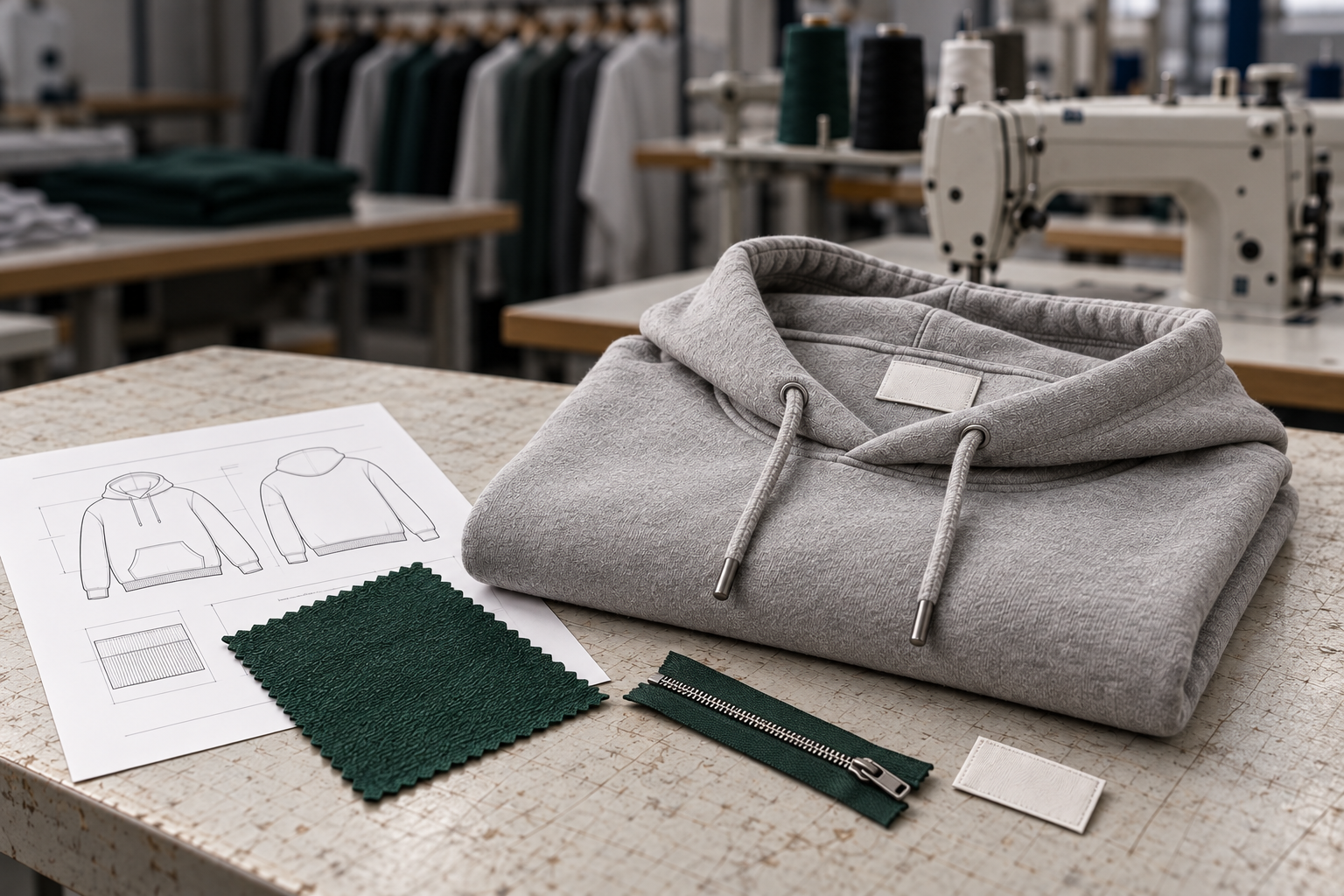
Turn comments into a clear approval record
Send one consolidated correction list with dated photographs and the current specification version. Separate approved points from changes still required. Identify the sample, colour and size, and state whether a revised physical sample is needed before production can proceed.
Keep an agreed reference sample where practical, and make sure the factory and buyer are working from the same information. If fabric, trims or decoration change later, discuss whether those changes require fresh approval. A clear reference helps production teams understand the target, but it does not replace bulk quality checks.
A practical approval checklist
Before signing off, confirm the fabric and colour; record measurements and tolerances; approve trims, labels and decoration; list outstanding corrections in writing; and identify the agreed reference sample. Clarify which checks will also apply during and after bulk production.
Discuss your next sample with SouthWest Trade
SouthWest Trade manufactures custom apparel in Pakistan, including hoodies, sweatshirts, joggers and T-shirts. Share your design or reference images, fabric requirements, size chart, quantities and custom details so we can discuss sample development and feasible production options.
Flexible MOQ. Requirements depend on the project. For help preparing the order breakdown, read How to Plan Your Apparel Order. Send your brief to info@southwestrade.net or contact SouthWest Trade.